
Mainstream leaders despite making tall claims and promises could not develop infrastructure for educational institutions in Kashmir. For many decades students from the Valley used to migrate to different parts of the country to study medicine, engineering, law and other subjects. Soon after a boy or a girl qualified 12th class, parents used to rush to New Delhi, Haryana, Punjab, Bangalore and other places to look for a suitable college for their ward. To secure a seat they used to pay through their nose and in some cases students used to take educational loan to finance their courses. After completing their degrees, not many students could get jobs they dreamt of and at the end they settled for less. In many cases degrees proved to be directionless. It was only after August 5, 2019, the government encouraged private investors to come forward and invest in developing the education sector in Kashmir.
During the past few years many private colleges have come up in the Valley. Not only private institutions, the government has also set up new colleges in Kashmir as well as Jammu region. Students are being encouraged to pursue their higher studies in the Union Territory rather than moving to other parts of the country.
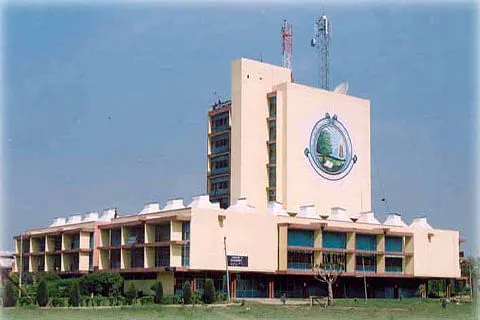
This change has occurred after a longtime as it was National Conference founder and legendary leader late Sheikh Mohammad Abdullah who put in exemplary efforts to popularize education in Kashmir. His contributions to education were nothing short of revolutionary. In the post-independence era, he championed reforms that democratized access to learning, embedding education as a cornerstone of his Naya Kashmir manifesto. This blueprint called for a national education council to oversee schemes for universal primary education, technical institutes, and even a national university. Under his leadership, the University of Kashmir was nurtured, evolving from its origins in 1948 into a hub for higher learning.
Late Sheikh Abdullah introduced free and compulsory education up to higher secondary levels, alongside affordable healthcare and land reforms that indirectly boosted educational mobility by alleviating poverty.
His vision transformed Kashmiris from subjects of feudal rule to empowered citizens, with education as the great equalizer. However, his successors couldn’t carry forward the good work done by the late leader. The mainstream leaders, ensnared in the web of regional politics, shifted priorities away from academia. Investment in education plummeted to zero with agendas dominated by tourism development and superficial infrastructure.
Remote states like Uttarakhand and Himachal Pradesh overtook J&K in the education sector by developing specialized law colleges, arts academies, and private partnerships fostering innovation. Building infrastructure for education took a back seat in Jammu and Kashmir. Leaders diverted funds towards the projects that had got nothing to do with developing the intellectual capital. This neglect was not accidental; it stemmed from a myopic focus, where short-term handouts trumped long-term empowerment.
Largely the focus remained on nurturing the vote bank rather than empowering Kashmiris. No effort was put into provide learning spaces to youth of Kashmir leaving them with no other option but to move to other states to pursue education. Same leaders who didn’t make any attempt to strengthen the education system in Kashmir don’t leave any opportunity to deliver sermons whenever they get a chance.
After 1947 New Delhi poured in billions for development, yet corruption scandals and mismanagement eroded trust. Political families, entrenched in power, prioritized tourist destinations like ski resorts and houseboats, turning Kashmir into a postcard rather than a knowledge hub.
Higher education suffered from structural deficits: delayed faculty recruitments, outdated curricula, and governance marred by political interference. Universities became battlegrounds for secessionist ideologies, with many allegedly embezzling funds. This betrayal not only stifled growth but also fueled the exodus of talent, as students sought better opportunities elsewhere.
After Manoj Sinha took over as the Lieutenant Governor of Jammu and Kashmir, he has shown keen interest in turning the Union Territory into a knowledge hub. He has laid emphasis on integrating spiritual heritage with modern education. LG Sinha has often reiterated that higher education institutions can produce innovators who will rebuild Kashmir.
Enrollment in higher education has surged, with gross enrollment ratios improved from 26% pre-abrogation to over 32% by 2025. Investments in smart classrooms, digital libraries, and skill-based programs align with the National Education Policy 2020, emphasizing innovation and employability. The Lieutenant Governor, serving as chancellor of all universities played a pivotal role in this revival.
As Kashmir navigates its future, education must reclaim its throne. In 2026, with central synergies, Kashmir can transform from a land of lost opportunities to a beacon of academic excellence.
The writer is Director of International Centre for Peace Studies (ICPS)