

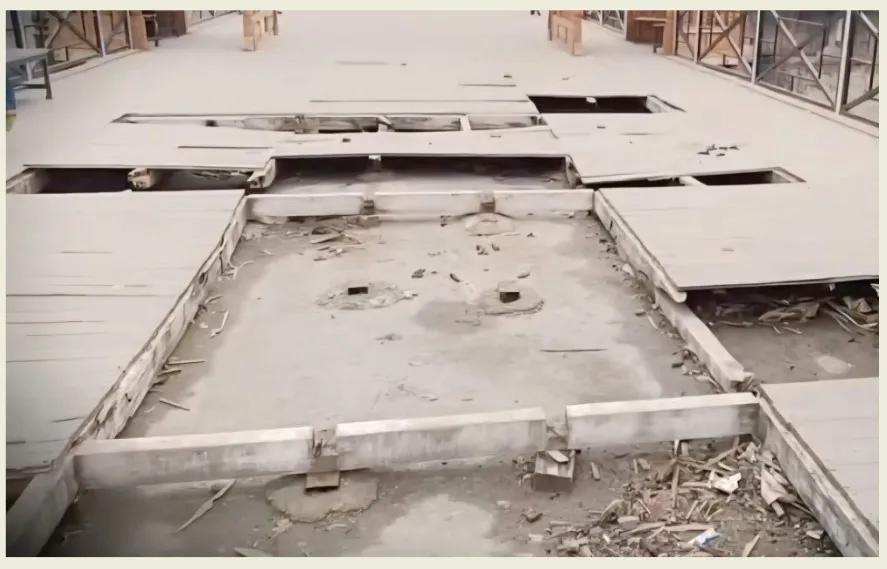
Srinagar, Feb 10: Revamped HabbaKadal heritage wooden bridge is in dismal condition in absence of repairs and surveillance to prevent damage to the structure.
For centuries, HabbaKadal has been more than just a bridge over the Jhelum. Nestled in the heart of Downtown Srinagar, it has witnessed the everyday rhythm of the city—shopkeepers opening shutters at dawn, children playing along the banks, and residents crossing it as part of their daily routine. Historically, HabbaKadal stood at the centre of one of Srinagar’s busiest trading hubs, connecting markets, homes, and livelihoods.
In January 2024, the dilapidated old bridge was revived under the Srinagar Smart City Project with renewed hope. The revamped structure, inaugurated with much optimism, featured a wooden deck and heritage-style gazebos. Locals and tourists were initially seen gathering there, clicking photographs and appreciating the initiative to restore the city’s new landmark. The project promised not just beautification, but also economic revival for nearby traders. But the optimism did not last long.
Barely a year after its reopening, the condition of the bridge has deteriorated alarmingly. Broken flooring, missing wooden planks, damaged huts and unsafe pathways have turned the once-celebrated structure into a challenge for those who use it.
“We cannot even walk properly on this bridge anymore,” said an aged woman while struggling to cross a damaged stretch of the wooden bridge.
“Several children skipped on the dilapidated surface, and at night we avoid crossing the bridge altogether. It has become unsafe,” she added.
For residents, the bridge—once meant to bring ease—has instead disrupted daily life. “This place was supposed to be a new public place,” the woman added. “Now it has created chaos for us.”
Shopkeepers operating around HabbaKadal speak of deeper consequences. Nearly 400 traders depend on the area for their livelihood, and many claim that their business has declined sharply since the bridge’s revamp. “We were promised that light motor vehicles would be allowed to pass through the bridge,” said a shopkeeper. “Authorities had given us assurance. But after construction, nothing like that happened.”
According to traders, traffic diversions were placed outside the bridge, turning the area into a parking zone rather than a passage. “If vehicles don’t pass, how will customers visit us?” a shopkeeper asked. “We have bank loans, electricity bills, and our children’s school fees to pay. Today, we are sitting idle.”
HabbaKadal, once known as a thriving commercial centre, now sees little footfall. “Tourists visit other places in Srinagar,” another trader said. “But they don’t come here. This bridge was built to attract them, yet it stands broken.”
Residents also questioned the planning behind the project. One local man pointed out that the area had traditionally served as a space where neighbourhood children played. “This was our children’s garden,” he said. “It was never meant for such a structure. The bridge has taken away that space and given us nothing in return.”
Several locals recalled that authorities had consulted residents before construction and promised minimal disruption. “They told us there would be traffic movement, parking facilities, and business opportunities,” a resident said. “But none of these promises were kept. When we questioned the work, we were warned not to interfere.”
Comparisons with the past further fuel resentment. Locals remember an earlier reconstruction of the bridge during the previous tenure of MLAShamimaFirdous, when the structure was concrete and stable. “The bridge then served the public well,” a resident recalled. “What exists today does not even last two years.”
Yet amid the anger, some residents acknowledge that responsibility does not lie with authorities alone. “The administration must answer for poor planning and maintenance,” a local trader said. “But people also need to protect public property. If we damage what is built, nothing will survive.”
The condition of HabbaKadal has become a symbol of a larger concern—development without sustained care. Projects may be inaugurated with fanfare, but without accountability and community responsibility, they risk falling apart, both physically and emotionally.


