
The ongoing conflict involving Iran, the United States, and Israel represents one of the most brutal geopolitical crises of the contemporary world. Though it has decades old historical roots, the confrontation, however, escalated sharply in Feb 2026, when the United States and Israel launched coordinated and devastating airstrikes on Iran under operation Lion’s Roar. The strikes targeted not only Iranian military facilities or nuclear-related infrastructure, they also hit civilian establishments as well inflicting heavy human sufferings. A political scientist may explain such conflicts through security interests or military strategy, a sociologist , however, provides a broader understanding.
From a sociological perspective, the Iran and US–Israel confrontation reflects deeper dynamics of geopolitical power struggles, technological warfare, and global interdependence. Modern civilization, while producing unprecedented technological and economic advancement, simultaneously generates new dangers that unfortunately challenge global stability.
Sociological dimensions of Iran and US-Israel conflict:-
Repercussions of Modernity: Sociologically speaking , such conflicts can be regarded as manifestation of the structural tensions of modernity. Because advanced military technology has precipitated the possibility of nuclear warfare, it poses a massive threat to global security. Attacks on Iran were partly justified using claims that her nuclear program posed a serious threat to global peace and security. Also it is pertinent to mention that modern economic systems are deeply interconnected and vulnerable to geopolitical shocks. So while Iran has attempted to disrupt shipping in the Strait of Hormuz, a crucial route through which about one-fifth of the world’s oil supply passes, it has resulted into major shocks to energy markets. So it can be argued that technological progress, nuclear weapons, global capitalism, and geopolitical rivalries have created a world where local conflicts can quickly escalate into global crises.
Globalisation: In the modern societies, the nature of conflicts has drastically changed because of globalisation. While in earlier periods conflicts were often geographically limited, today, due to economic and technological interdependence, regional wars quickly become global crises. The Iran conflict has not only affected other gulf countries, but most nation states of the world. This reflects the sociological concept of time–space distanciation , where events in one region rapidly influence social and economic processes across the globe.
Liquid modernity of Zygmund Bauman: Bauman has famously argued that contemporary society is characterised by instability, uncertainty and rapidly changing political and economic conditions. The Iran US–Israel conflict typically illustrates this instability. It also explains how alliances shift, conflicts emerge suddenly, and the geopolitical order becomes fluid. These drastic changes can also be regarded as manufactured risks or threats to which the modern societies must constantly adapt. This makes global politics increasingly unpredictable.
The Struggle for Regional Dominance:- Power is addictive. Besides technological and economic risks, the conflict also reflects a struggle for power and ideological dominance in the world in general and in the Middle East in particular. It seems evident that Iran wishes to expand its influence through alliances with regional groups and opposition to Western dominance. On the other hand Israel and the United States aim to prevent Iran from acquiring nuclear capabilities and domination. Thus the conflict represents a broader sociological phenomenon i.e., competition between states for power, legitimacy, and geopolitical influence.
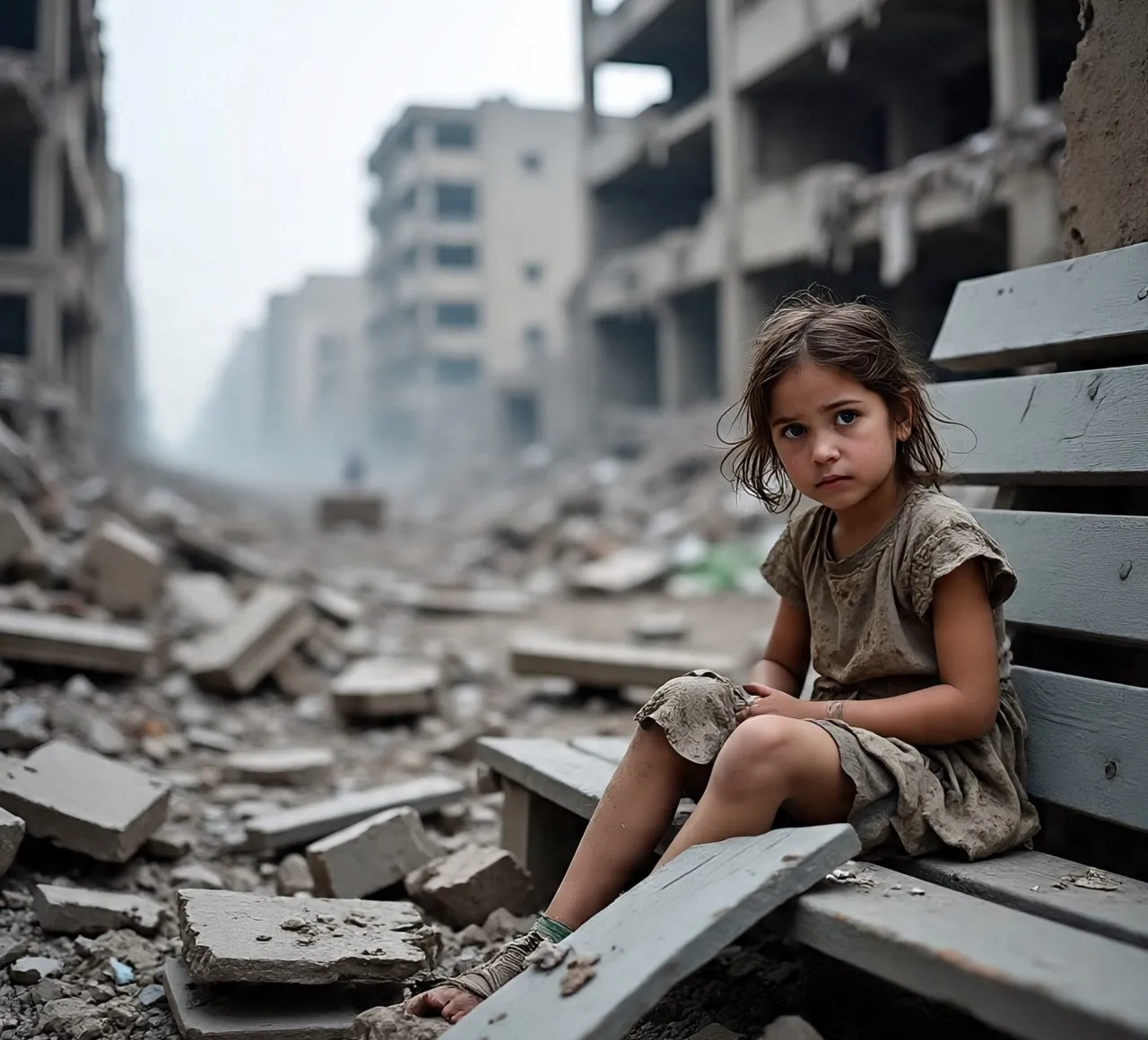
Humanitarian and Social Impact: This is one of the important sociological dimensions that involves the social consequences of war. The conflicting states aren’t playing this war in isolation. It is producing devastating impacts on societies including displacement of populations, massive civilian casualties, economic instabilities and other humanitarian crises. These effects highlight how wars drastically transform social life and everyday experiences.
Cultural Narratives and Symbolic Politics: Since time immemorial, humans have relied on symbols, myths, and shared narratives to interpret their experiences and give meaning to the collective life. Whether religious, cultural, or political, symbols serve as powerful means through which communities construct identity and justify actions. In sociological terms, symbolism plays a crucial role in shaping how societies perceive friends, enemies, threats, and moral responsibilities. Conflicts are also shaped by symbols, historical narratives, and collective memory. For example: narratives of resistance in Iranian political discourse and narratives of security and survival in Israeli political discourse. Such symbolic meanings influence public opinion and national identity.
Conclusion: So we can all agree that Iran US–Israel conflict cannot be understood only as a military confrontation. It reflects multiple sociological dimensions including power struggles, ideological identities, technological risks, economic interests, globalization, and humanitarian consequences.
From a sociological lens, the conflict represents how modern global society is shaped by complex interactions between political power, technological development, and social structures. Understanding these dimensions helps explain why contemporary conflicts often have global consequences that extend far beyond the battlefield.
Tasaduq Maqbool Bhat, PG student at Department of Sociology, University of Kashmir.