
Srinagar, Apr 8: The Jammu and Kashmir Government has notified its first comprehensive framework to regulate and professionalise substance abuse treatment, banning forced rehabilitation and mandating strict licensing norms for de-addiction centres.
The J&K Substance Use Disorder Treatment, Counselling and Rehabilitation Centres Rules, 2026, notified on April 2 under S.O. 91, have been framed under the Narcotic Drugs and Psychotropic Substances Act, 1985. The rules lay down detailed provisions for licensing, infrastructure, staffing, ethical standards, monitoring and data protection for all rehabilitation facilities.
Any treatment must be voluntary. Any “forced” and involuntary admission can only be made under judicial or medical certification. The new rules lay emphasis on informed consent, confidentiality, and dignity. Any use of force, coercion, threatening or degrading treatment has been prohibited. The female patients can be attended to only by female staff, while parental or guardian consent is mandatory for minors. The rules encourage family involvement and community-based follow-up.
Coming strongly on the mushrooming of private rehabs in J&K, the rules make licensing mandatory.
“No person or institution shall establish or run a Centre without obtaining a valid licence from the Licensing Authority,” it states.
The Licensing Authority for rehabs is the Director Health Services, Jammu/Kashmir, or “other officer” as the Government may notify. The licenses will be valid for three years and renewable only after inspection and satisfactory compliance with regulations.
The centres must meet minimum standards, have 400 sq ft per 10 beds for indoor patients, and separate male/female wards. These must have dedicated counselling and OPD rooms, emergency detoxification beds with continuous medical supervision. In addition, CCTV surveillance has been made mandatory in all critical areas, while the footage has to be retained for 90 days. No centre can operate in a residential area without municipal and police clearance.
Each Centre is mandated to have at least one full-time or part-time Psychiatrist, one MBBS Medical Officer with addiction-medicine training, one Clinical Psychologist per 15 patients, one Nurse per 10 patients, and qualified Social Workers/Counsellors. The professional staff must be NMC/MCI registered. They must also undergo periodic training from recognised institutions like NISD or AIIMS-NDTC.
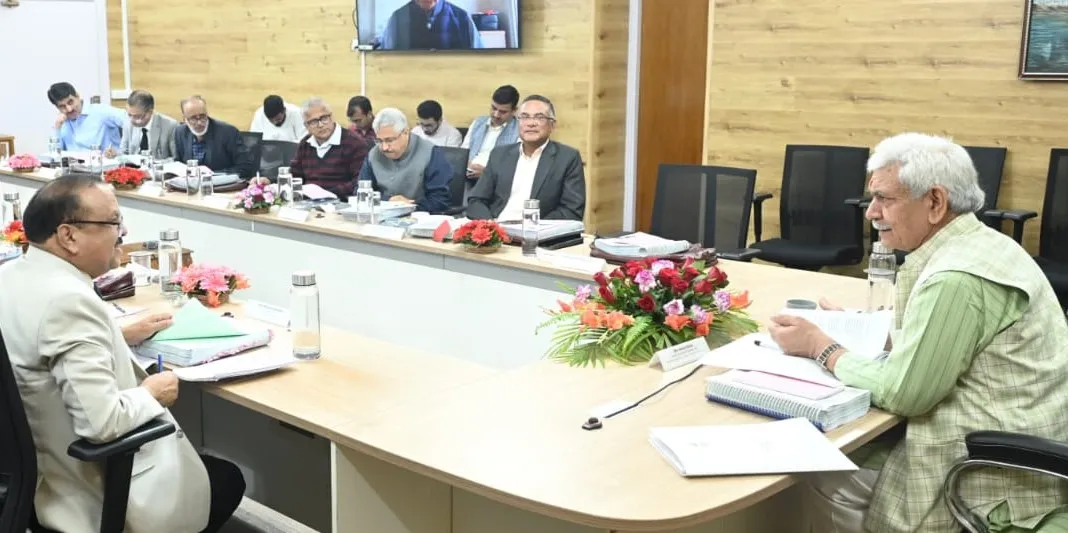
A high-level Monitoring Committee with experts in Health, Law, Justice, Social Welfare, Police, and Civil Administration. The rules, health experts said, have been framed in view of drug abuse escalation in J&K and the resultant intervention centres to meet the demand. The existing centres must comply with the new norms in a time-bound manner, the Government has ordered.