
There has been a lot of euphoria over the release of environmental activist Sonam Wangchuk on Saturday (March 14, 2026) after the Government of India revoked his detention under National Security Act ( NSA). But that’s not an end itself. Ladakh has to be viewed and understood from a wider perspective; neither can it be hostage to the unfortunate developments of September 24, 2025, nor its concerns agitating it could be wished away.
Fundamentally, the release of Sonam Wangchuk does make a difference to the ongoing talks between the high-powered committee of Ministry of Home Affairs and representatives of Ladakh – mainly Leh Apex Body and Kargil Democratic Alliance – – because one of the issues irritating them has been removed. There are several explanations and attributions. Some have drawn the conclusion that the release before his hearing in the Supreme Court was compulsion of the government, others have taken a more pragmatic view that the Ministry of Home Affairs is keen on reinforcing peace and stability in the cold desert region. It’s a fact that detention of Sonam Wangchuk had become one of the hurdles. The MHA has responded to the sensitivity of the situation and quashed his detention under NSA.
As the things stand today, Centre has delivered a firm message: it doesn’t sit on prestige when overall good of the people is concerned, and national security is paramount. The government which is dealing with several issues across the country, from the threat of infiltration from across the border, heightened drone activities in Jammu and Kashmir, reemergence of the subversive activities in some other states, is deeply conscious of the fact that even an iota of unrest in Ladakh has to be taken care of.
Ladakh represents too many things all at once – it was part of the erstwhile state of Jammu and Kashmir and its links with its former state, though that too is a UT, continue to play out. The age-old relations between the two cannot be done away with in a matter of few years. That Ladakh is a separate UT doesn’t mean all its ties with J&K are over. And the fact is that both the UTs are part of Indian Union. This reinforces their relations. Zojilla pass is still a joining point and after it is converted into a tunnel, the linkages would become stronger.
The point here is that anything happening in Ladakh is also traced to its original state J&K, and both impact each other. The world has seen changes on the map of the former state of J&K but there is a tendency to link the two. There are alternative routes to the cold desert region, but a majority of them travel via Jammu and Kashmir. Most of troops and their supplies move via J&K. This only reinforces the strong links and the strategic cruciality of the two regions intertwined by the history and geography.
On Saturday, Centre through its official statement on the release of Sonam Wangchuk, made few things clear – Wangchuk had spent almost half the period of his sentence under NSA in jail,. Second, it wanted to facilitate dialogue with the stakeholders and discuss all issues, including constitutional safeguards, with an open-mind. The stress was on commitment to fostering peace and stability in the region. This was a forward -looking idea. Now that has to be translated on the ground.
It is very crucial for all the stake holders in Ladakh to respond to this gesture of Government of India, the MHA in particular, with matter-of -factness. They have seen the agitational path did not yield anything except complicating the issues they wanted to get addressed – whether statehood, sixth schedule and other constitutional guarantees. A sort of mistrust cropped up and that delayed the things. The dialogue is the best option, and on Saturday these were opened wider by the Centre. That is an opportunity to seize the moment.
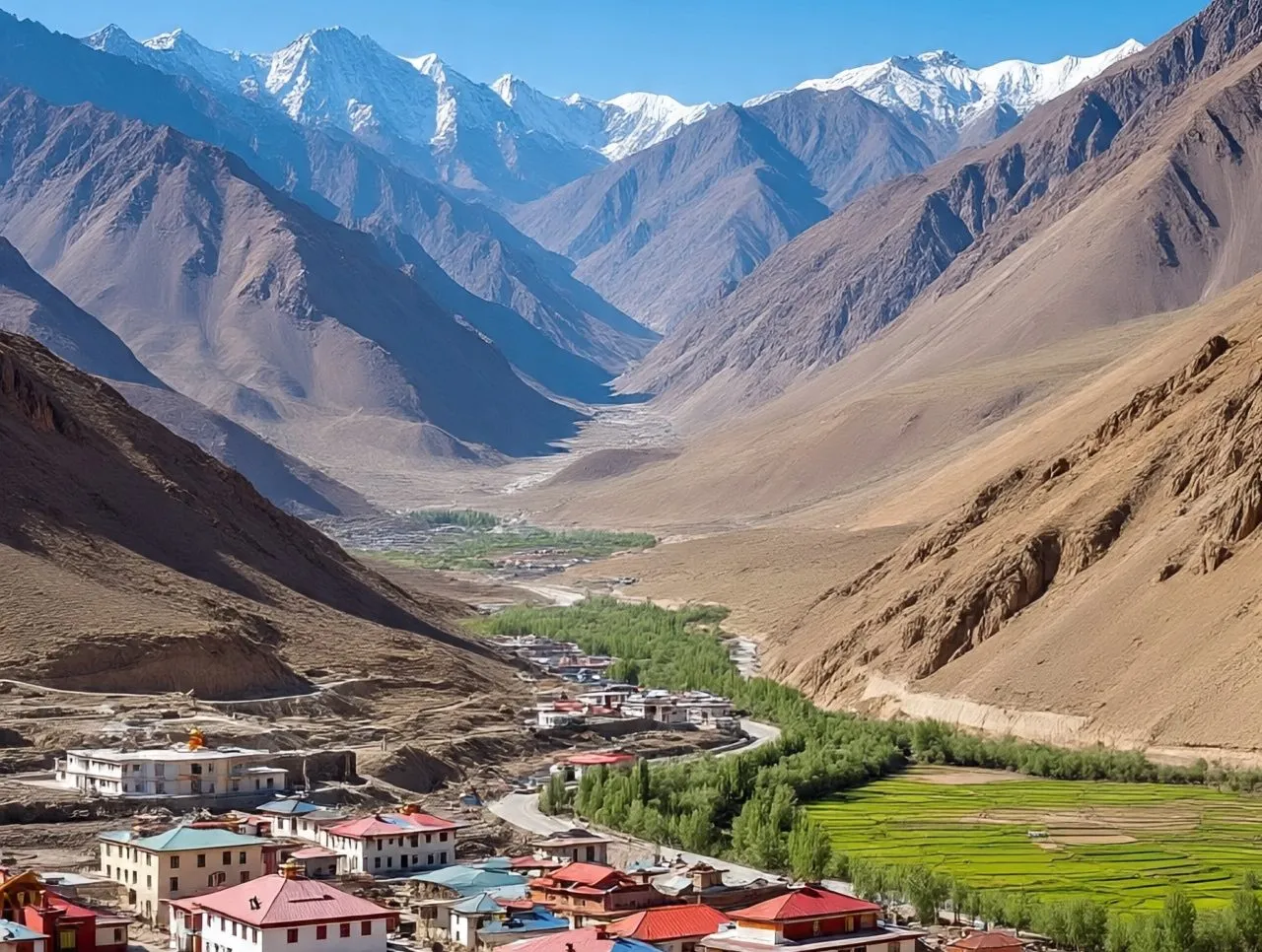
There are certain practical realities that must be taken into account. Ladakh has more than 79,000 Sq. Kms of area, which is larger than many of the states in the country, but its population is slightly over three lakh, which is less than in many districts across the country, including Jammu and Kashmir. There also is need to look at the optics and reality of sixth schedule vis-à-vis in the places in north-east. There should be a clear study of these places whether they have been able to benefit as they were looking from this particular constitutional provision. Ladakh will also have to look for balance of powers in the region before it presses the demand for statehood.
That being that. The Centre, nevertheless, should listen to all these demands and put facts and figures on the table to understand the view point of those involved in talks, and others as well. This is important as the whole trajectory of discussions and outcome will affect the entire population and different areas of the region. A larger table is required to get a wholesome and democratic view to have a comprehensive picture of the list of demands and how these can be addressed.
MHA, working under the leadership of Amit Shah, has shown time and again that it is committed to preservation of the culture and identity of Ladakh, and it has sought to address some of the critical issues, like jobs for locals, and boosting of tourism. Tourism generates 80 per cent of GDP in Ladakh. And tourism cannot flourish if there is a sense that there are shutdowns and agitations. Ladakhis themselves will have to correct the picture, which got distorted on 24th September 2025.
New Lieutenant Governor Vinai Kumar Saxena, who on the first day of assuming office announced filling of vacancies in government services, welcomed the release of Sonam Wangchuk as a positive step by the Centre towards fostering an environment of peace, stability and mutual trust in Ladakh. It was a profound message in which the release was seen as a step-in peace building. If this is correct, he also is correct in saying that “there is no space for agitation and violence in Ladakh.” He added with a lot of pragmatism that, ‘All issues pertaining to the aspirations and concerns of the people, would be addressed through dialogue with various stakeholders, community leaders and citizens in Ladakh.”
This read with the MHA’s statement makes a perfect case for dialogue leading to solution of issues revolving around aspirations and concerns.