
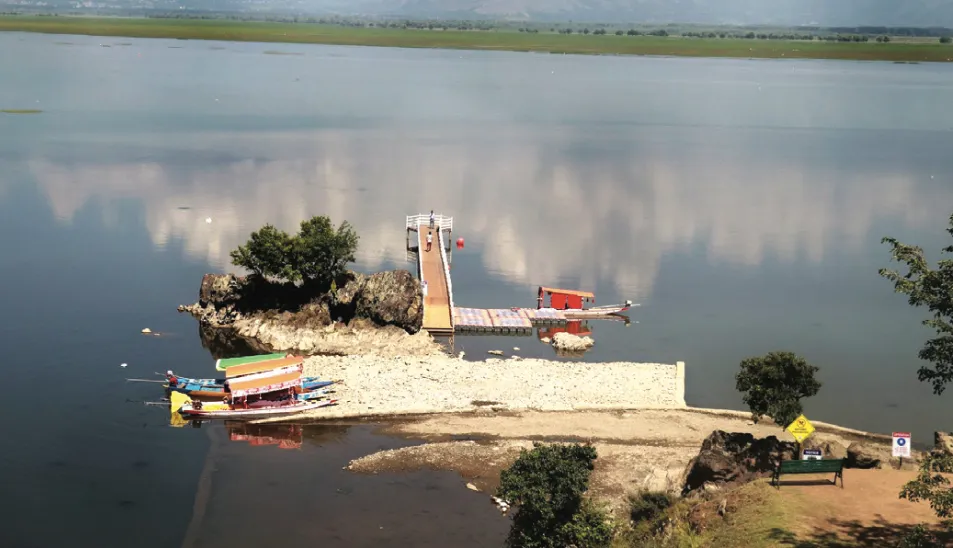
The ecological systems of the Valley from lakes like Dal to Manasbal to Wular, river system of Jehlum,wetlands, springs and nallah, are all under mounting stress from untreated sewage, solid waste inflows, biomedical waste (both solid and liquid), construction debris and climate-induced hydrological variability. Linear consumption patterns are colliding with fragile mountain ecosystems. The result is eutrophication, declining water quality, air pollution from biomass burning and rising public health risks.
Circularity offers a structurally different approach.
Lake weed and dredged biomass can be converted into compost or bioenergy. Treated wastewater can be reused for horticulture. Construction and demolition debris can substitute riverbed mining aggregates. Apple pruning waste can become briquettes or biochar instead of contributing to winter air pollution. Tourism waste streams can be decentralised, segregated and reintegrated into local value chains.
These are not environmental embellishments. They are climate adaptation tools.
For Indian corporates operating in or sourcing from the region, circularity must move into the risk register. Under the Business Responsibility and Sustainability Reporting (BRSR) framework mandated by the Securities and Exchange Board of India, material resource use, waste intensity, and water stewardship are no longer peripheral disclosures. They are indicators of governance quality.
Boards must therefore ask:
What percentage of inputs are recycled or recovered?
Is wastewater reused?
Are supply chains exposed to ecological degradation risks?
Is circular infrastructure budgeted as capex, not CSR?
In a climate-vulnerable, seismic and flood-prone region circularity reduces raw material volatility, lowers carbon intensity, protects water security and enhances social license to operate.
Kashmir does not need symbolic plantation drives or episodic clean-up campaigns. It needs institutionalized resource governance.
Circularity, embedded within enterprise risk management and aligned with SEBI’s ESG architecture can transform ecological stress into economic resilience.
In the Valley’s context, closing the loop is not only environmentally prudent but it is fiduciary foresight.
Reframing Resource Efficiency
Circularity is often discussed as a sustainability trend. In Kashmir, it is something far more fundamental. It is a structural necessity for ecological survival, economic resilience and governance credibility.
The Valley’s environmental stresses are not isolated or episodic. They are systemic. Water bodies are nutrient-loaded. Construction activity is accelerating. Tourism pressure is rising. Climate variability is intensifying. At the same time material consumption patterns remain linear like extract, use and discard. This linear metabolism is colliding with a fragile Himalayan ecosystem already exposed to warming trends, erratic precipitation, snow variability and extreme weather events.
Global research increasingly confirms what local observation already suggests. Climate action without material efficiency is incomplete. Studies indicate that more than half of global greenhouse gas emissions are linked to material extraction and processing. Resource use is also associated with over 90 percent of biodiversity loss and significant water stress worldwide. Yet the global economy remains predominantly linear with virgin material extraction continuing to rise.
For Kashmir, the implications are stark. The Valley is not merely facing climate change but it is facing resource mismanagement amplified by climate stress.
Linear Systems in a Fragile Ecology
The pressures on Jehlum, Dal Lake and Wular Lake and all other water systems illustrate the consequences of linearity. Untreated or inadequately treated sewage, nutrient runoff, encroachments, solid waste inflows and catchment degradation feed into water bodies already vulnerable to temperature shifts and hydrological variability.
Eutrophication is not merely an aesthetic concern. It represents systemic nutrient imbalance. Excess nitrogen and phosphorus alter aquatic ecosystems, degrade biodiversity, affect fisheries, reduce oxygen levels and compromise drinking water safety. Climate warming exacerbates algal blooms and accelerates ecological decline.
Simultaneously, horticultural waste from apple and walnut orchards is frequently burned or discarded. Construction and demolition debris often enters informal dumping streams, contributing to riverbed extraction pressures. Tourism generates plastic and organic waste without fully developed reverse logistics systems.
The paddy and other agriculture produce is already under stress like-wise water which may effect and bring food and water security to the fore this summer.
These are not isolated environmental management gaps. They are features of a linear economic structure operating in a climate-vulnerable mountain ecosystem.
What Circularity Research Shows
Research on circular urban systems demonstrates several consistent findings:
Material Efficiency Reduces Emissions
Transitioning from virgin resource extraction to recycled inputs can significantly lower lifecycle emissions, especially in construction, metals, plastics and organics.
Waste-to-Value Models Generate Economic Gains
Composting, biomass recovery, industrial symbiosis and recycled aggregate production create local value chains and reduce dependence on external resource flows.
Decentralised Systems Enhance Resilience
Especially in mountainous or climate-sensitive regions, de-centralised waste treatment and water reuse systems reduce infrastructure vulnerability.
Nutrient Recovery Improves Ecosystem Health
Controlled nutrient recirculation from wastewater and biomass reduces lake loading and enhances soil productivity.
Circular Infrastructure Reduces Volatility Risk
By lowering raw material dependency, organisations reduce exposure to price shocks and supply disruptions.
These findings are not abstract. They are directly applicable to Kashmir ecological and economic landscape.
Closing the Nutrient Loop
Consider a lake-centric circular model.
Macrophytes harvested from eutrophic lakes can be composted or processed into bioenergy. Treated wastewater from sewage treatment plants can be reused for horticultural irrigation instead of being discharged back into water bodies. Nutrient-rich sludge can be safely processed for agricultural application under strict monitoring.
Such an approach achieves multiple outcomes:
Reduced nutrient inflow to lakes
Lower freshwater extraction for irrigation
Improved soil organic carbon
Reduced open dumping
Livelihood creation through biomass processing
This is not merely environmental remediation. It is resource governance.
When embedded within municipal planning and supported by private sector participation circular water systems reduce long-term ecological liabilities and improve public health outcomes.
Horticulture Waste
Apple industry in Kashmir generates substantial pruning waste, packaging residues and organic by-products. Open burning contributes to seasonal air quality deterioration and carbon emissions.
Circular alternatives include:
Biomass briquetting for clean fuel substitution
Biochar production for soil carbon enhancement
Composting hubs for organic fertiliser
Reusable packaging cooperatives
Research demonstrates that biochar integration can improve soil moisture retention, enhance nutrient efficiency and increase resilience to climate stress. In water-scarce or rainfall-variable conditions, soil carbon becomes a climate adaptation tool.
A horticulture-linked circular economy reduces emissions, strengthens rural incomes and supports climate-resilient agriculture directly aligning with adaptation strategies under State Action Plans on Climate Change.
Reducing Extraction Pressure
Urban expansion in Srinagar and surrounding areas has increased demand for sand and aggregates. Informal dumping of construction debris exacerbates flood vulnerability and ecological degradation.
Circular interventions include:
Segregated C&D waste collection centres
Recycled aggregates for road sub-base
Mandatory reuse quotas in municipal procurement
Fly ash brick promotion
Global research indicates that recycled aggregates can reduce embodied carbon and material costs when properly processed. In a flood-prone region, reducing riverbed mining also protects hydrological stability.
Circular construction is therefore not only a mitigation strategy but also a disaster risk reduction measure.
Tourism and Decentralised Systems
Tourism hubs such as Gulmarg, Pahalgam and Sonamarg experience seasonal surges in waste generation and water stress. Research on mountain tourism economies shows that decentralised composting, gray water recycling, and deposit-return systems significantly reduce ecological footprints.
Circular tourism strengthens destination resilience and protects brand value. In a region where ecological identity underpins economic stability this step is governance-critical.
Circularity as Corporate Risk Governance
Under India’s evolving ESG architecture, circularity must be integrated into corporate oversight frameworks.
The Business Responsibility and Sustainability Reporting (BRSR) framework mandated by the Securities and Exchange Board of India requires disclosures on material use, waste management, water consumption and environmental performance.
For companies operating in or sourcing from Kashmir, resource dependency risks are material. Climate volatility, water stress, regulatory tightening and community expectations directly affect operational continuity.
Boards should therefore integrate circularity into Enterprise Risk Management by examining:
Recycled input percentage
Waste recovery rates
Water reuse ratios
Raw material volatility exposure
Compliance liabilities
Circularity reduces:
Carbon intensity
Supply chain risk
Regulatory exposure
Reputational vulnerability
Research consistently shows that companies embedding material efficiency into core strategy demonstrate greater long-term resilience and investor confidence.
Fiduciary Duty in a Climate-Exposed Region
Directors under the Companies Act 2013 are obligated to act in the long-term interest of the company and its stakeholders. Climate and ecological risks are now financially material.
In Kashmir’s context:
Flood risk affects infrastructure and insurance costs.
Water degradation affects public health and productivity.
Air pollution and water pollution increases healthcare burden and social pressure.
Resource depletion raises input volatility.
Circularity becomes a fiduciary instrument. It aligns environmental stewardship with long-term value preservation.
Institutionalising Circular Governance
To move from concept to structure, several governance mechanisms are essential:
Data Systems
Digitised tracking of material flows, waste streams and water reuse.
Policy Integration
Embedding circular requirements into municipal master plans and procurement rules.
Budget Allocation
Ring-fenced capex for recycling infrastructure and decentralised treatment systems.
Third-Party Verification
Assured BRSR disclosures to prevent sustainability washing.
Community Participation
Co-governance models for biomass and waste management.
Without institutionalisation, circularity remains rhetorical.
The Strategic Crossroads
The fragility of Kashmir demands structural transformation. The region is climate-sensitive, hydrologically complex and economically dependent on natural capital. Continuing linear patterns will intensify lake degradation, air pollution, soil erosion and public health pressures.
Circularity offers a systems-based alternative. It converts waste into value, reduces extraction pressure, enhances soil and water resilience, lowers emissions and strengthens governance credibility.
This is not environmental idealism. It is risk mitigation.
In a warming, water-stressed and hazard-prone region closing the loop is an act of fiduciary foresight.
Circular Kashmir is not about symbolism. It is about embedding resource efficiency into the architecture of climate governance, aligning ecological restoration with economic stability and corporate accountability.
The future resilience of the Valley depends not merely on protecting what remains, but on redesigning how resources flow.
In that redesign lies both ecological survival and governance integrity.