
Srinagar, Feb 14: Despite possessing enormous hydropower potential, Jammu and Kashmir continues to face a severe financial strain due to its dependence on electricity purchases from outside generating companies.
J&K has earmarked Rs 9300 crore for power procurement in the 2026-27 Budget, an amount that constitutes nearly 8 percent of the total Rs 1.13 lakh crore Budget.
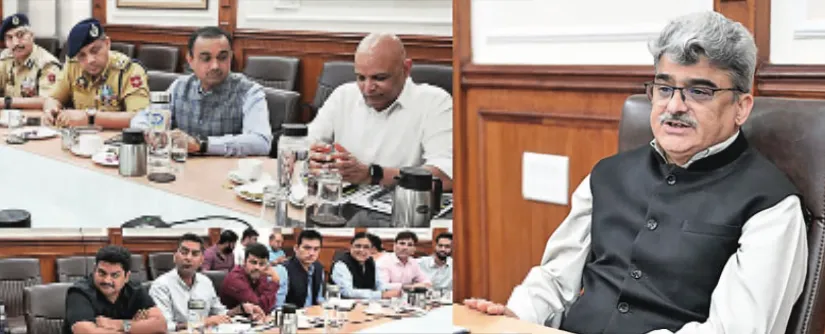
Chief Minister Omar Abdullah, while presenting the Budget on February 6, described power purchase as one of the largest expenditure heads for the government.
The allocation once again underscores the paradox of J&K being water-abundant yet energy-deficient, despite its vast hydro resources.
Over the past decade, J&K has spent nearly Rs 60,000 crore on purchasing electricity from outside suppliers, reflecting the mounting fiscal pressure on the exchequer. Official figures show that the expenditure has steadily risen year after year.
In 2021-22, the government spent Rs 8197 crore to procure 16,207 million units (MU) of electricity, the highest annual outlay recorded in the last 10 years.
In 2020-21, Rs 7047 crore was spent for 14,362 MU, while in 2019-20, the expenditure stood at Rs 6987 crore for 13,345 MU.
The upward trajectory is visible in earlier years as well: Rs 6561 crore in 2018-19, Rs 4844 crore in 2017-18, and Rs 4752 crore in 2016-17.
Between 2012-13 and 2015-16, annual spending gradually rose from Rs 3382 crore to Rs 4803 crore.
Officials said these figures highlight the increasing financial burden of meeting J&K’s power demand, especially during the winter months when local generation dips due to reduced water flow in rivers.
The high cost of market purchases, combined with low revenue realisation and transmission and distribution (T&D) losses, has widened the gap between expenditure and recovery.
The government has introduced multiple reforms in recent years, including smart metering, billing improvements, and amnesty schemes aimed at recovering outstanding principal dues by waiving interest and penalties.
However, senior officials privately admit that such measures offer only temporary fiscal breathing space and fail to address structural inefficiencies in the power sector.
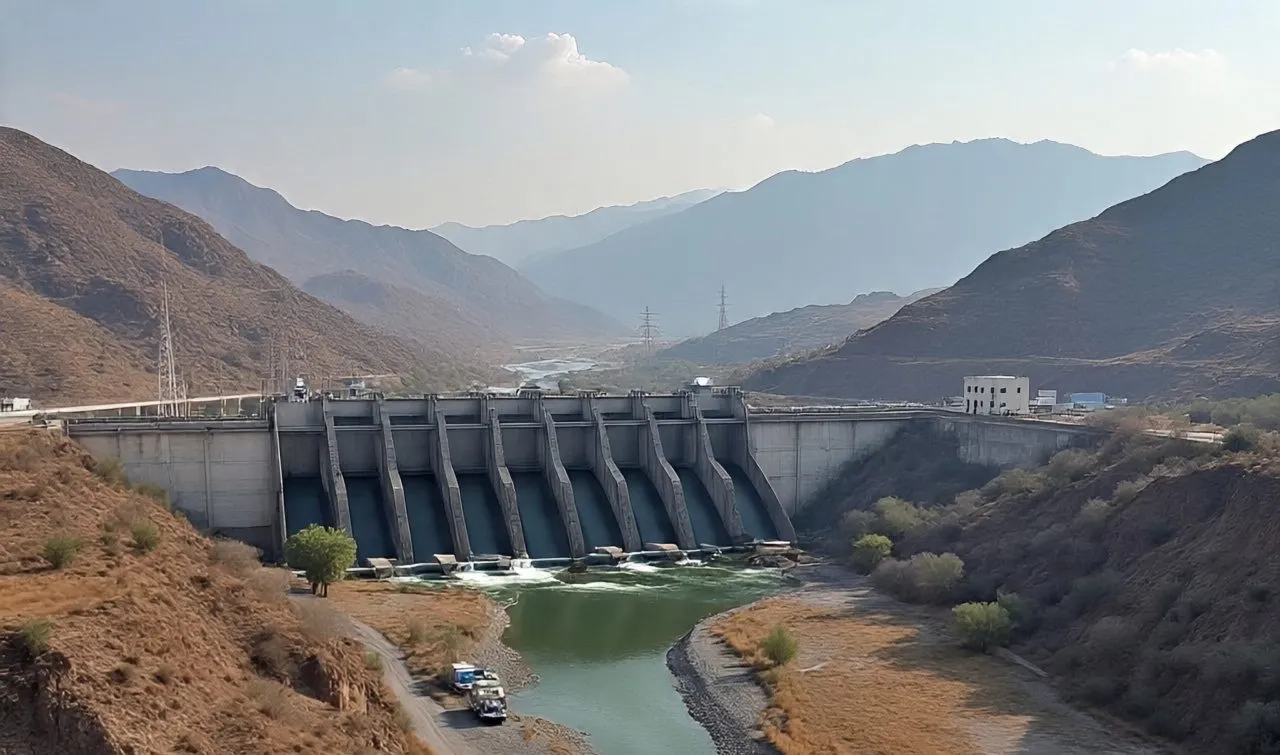
To reduce long-term dependence on costly market purchases, the administration has accelerated the execution of major hydropower projects across J&K.
The 1000 MW Pakal Dul Hydroelectric Project is scheduled for commissioning this year.
Once operational, it is expected to generate approximately 3230 million units of electricity annually, significantly boosting local generation capacity.
In addition, the 12 MW Karnah HEP is targeted for completion this year, while the 37.5 MW Parnai Hydroelectric Project has reached an advanced stage of execution. Several other projects including Kwar, Ratle, Kirthai-I, and Kirthai-II are at various stages of construction or appraisal.
The government has also announced plans to revive the long-stalled 1856 MW Sawalkote Hydroelectric Project with strong support from the central government. Officials believe that the timely commissioning of these projects will substantially enhance the availability of clean and low-cost power, thereby reducing reliance on the market and easing pressure on public finances.
However, energy experts caution that while new generation capacity will help, reforms in distribution efficiency, revenue recovery, and curbing power theft will be equally crucial to stabilise the sector financially.