

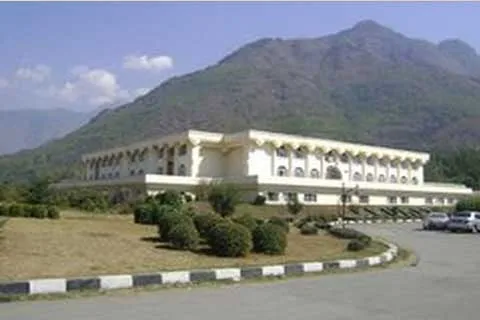
Srinagar, Dec 23: Sher-e-Kashmir University of Agricultural Sciences and Technology of Kashmir has launched a 15-day training programme on the mass production of biological control agents under the Holistic Agriculture Development Programme (HADP), aimed at reducing dependence on chemical pesticides and promoting sustainable farming practices.
Titled Mass Production of Biological Control Agents under HADP-18 (Minimisation of Pesticide Use in Agriculture), the programme is being held at the university’s Shalimar campus from December 19, 2025, to January 2, 2026. Farmers from several districts of the Kashmir Valley, representing diverse agro-climatic zones and cropping systems, are participating in the training.
Jointly organised by the Division of Entomology and the Division of Plant Pathology, Faculty of Horticulture, the programme is being coordinated by Mudasir Gani, Assistant Professor (Entomology), and M. Najeeb Mughal, Professor (Plant Pathology).
Officials said the training combines classroom lectures, laboratory demonstrations and hands-on practical sessions, covering mass multiplication, quality control, formulation, storage and field application of biological control agents for the management of insect pests and plant diseases. The initiative, they said, is designed to enhance farmers’ technical capabilities while encouraging a transition to eco-friendly pest management methods.
The inaugural function was held on Tuesday at SKUAST–Kashmir. Akhtar Ali Khan, Head of the Division of Entomology, said the programme addressed growing concerns over pesticide misuse and highlighted the responsibility of scientific institutions in guiding farmers towards safer and sustainable alternatives.
Tariq Rasool Rather, Professor (Plant Pathology) and Principal Investigator of the HADP-18 project, said the initiative focuses on capacity building, skill development and entrepreneurship through local production of biological control agents. He added that the programme aligns with HADP’s broader objective of strengthening climate-resilient and environmentally responsible farming systems.
Addressing the participants, Vice-Chancellor Nazir Ahmad Ganai called for curbing the indiscriminate use of chemical pesticides, citing their adverse impact on human health, the environment and soil biodiversity. He said biological control agents and biopesticides offer safer alternatives and can play a crucial role in integrated pest management strategies.
Ganai also underlined the potential of biocontrol production to generate rural employment and promote local enterprises, reducing reliance on imported agrochemicals while improving farm incomes. The programme concluded with a vote of thanks by Dr M. Najeeb Mughal.


